Answers to the Most Frequently Asked Questions about Silver Metal Clay
May 21, 2026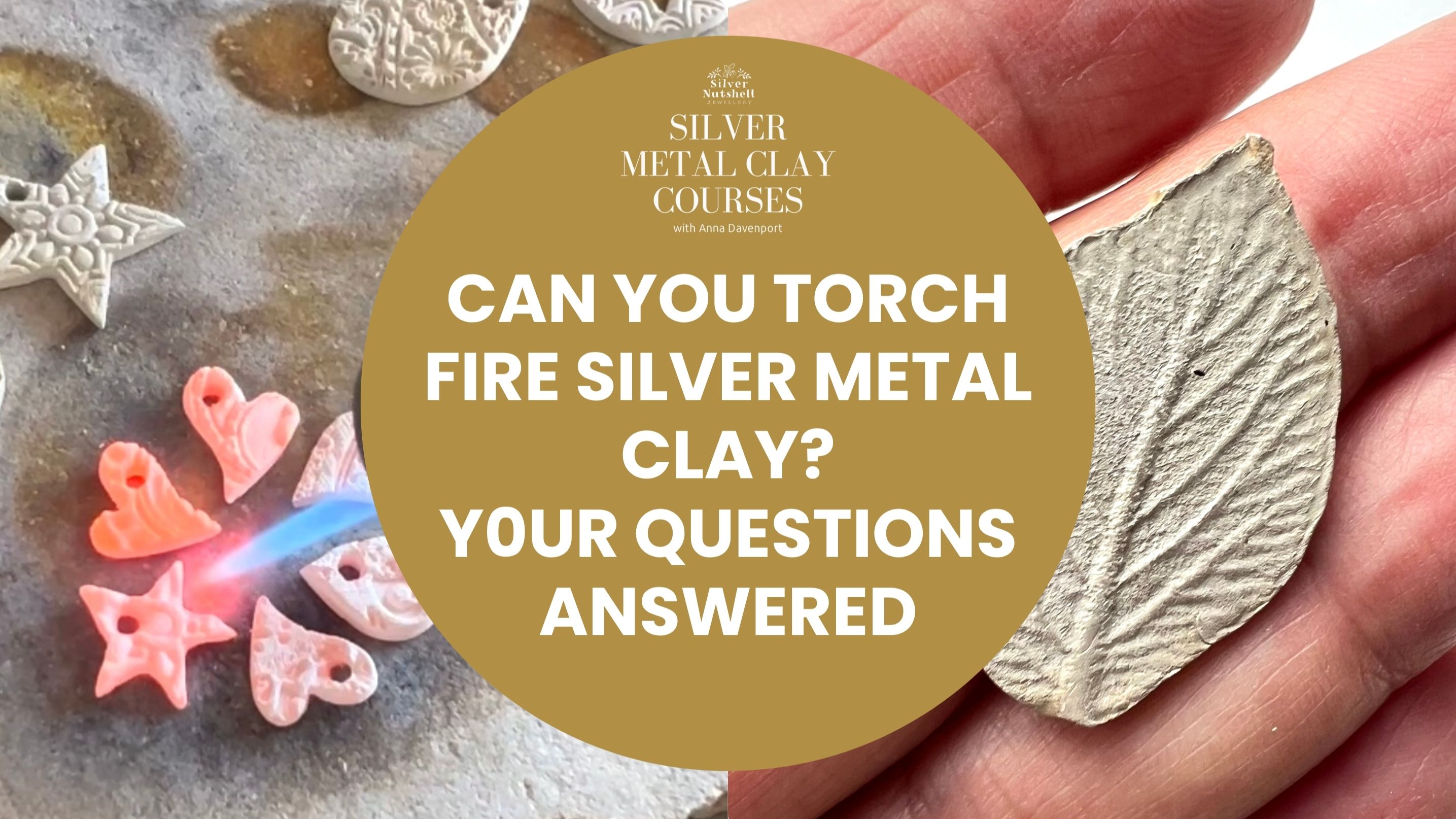
By Anna Davenport, Founder of Silver Nutshell
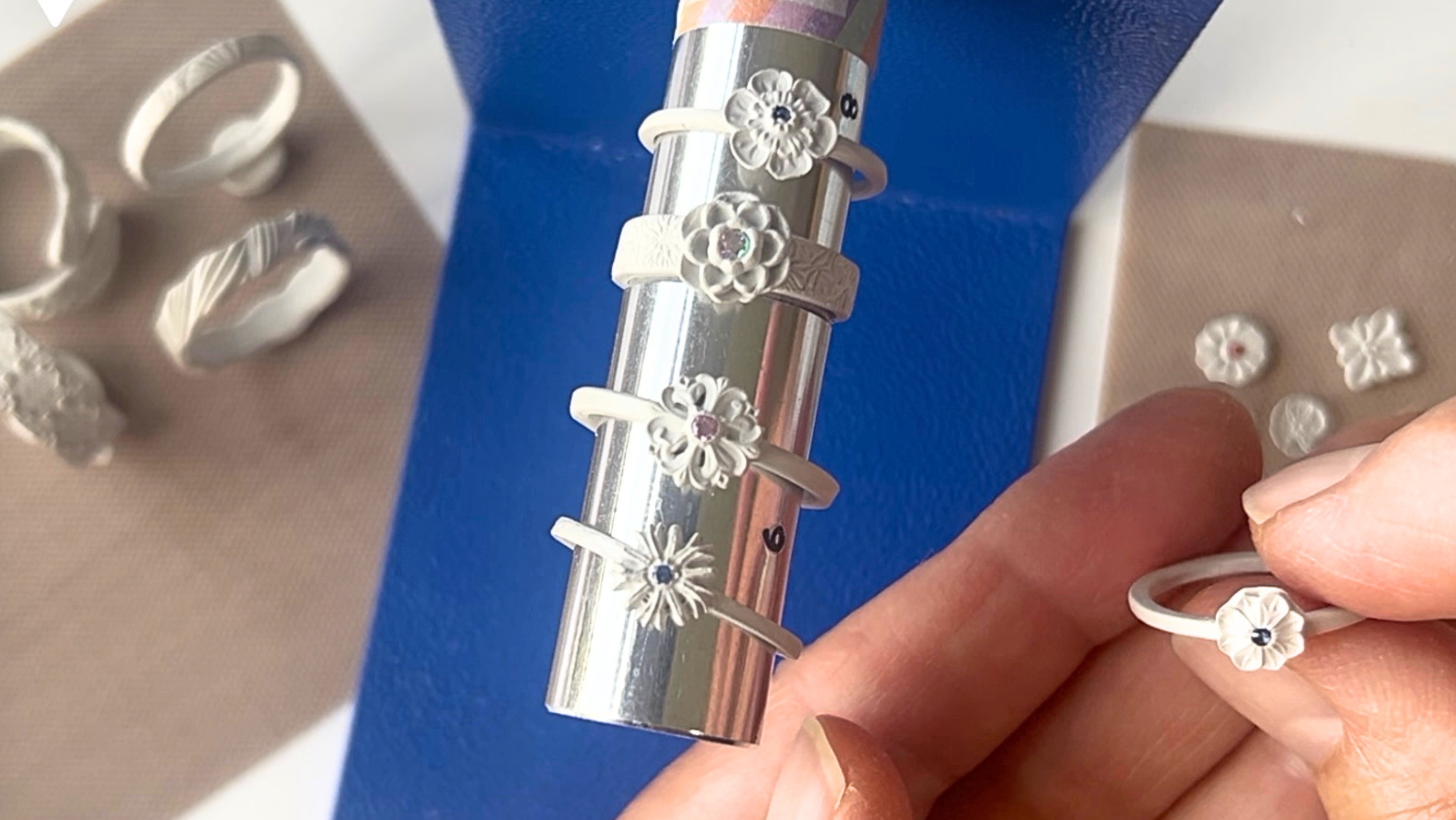
1. How much silver metal clay do I need to make a ring?
Look this question up on google and it will tell you that you need 7g - 10g of silver metal clay. Where in fact, you can make rings with less clay. That's particularly useful right now with prices of silver being so high! Here's what I do...
- For my No-Join Ring Bands: You'll need about 1-2g of silver metal clay
- Textured Ring Bands: Typically these require 3-5g, depending on the thickness and width.
- Shrinkage Factor: Remember that silver metal clay (in my studio that's Art Clay Silver) shrinks by 8% to 10% during firing, so always start with a slightly larger size than you need. FOR EXAMPLE: If I need a size 9, I'll make a ring x2 sizes larger, so the wet clay will need to be a ring size 11. For UK students, you'd need to make a size W, so that when it's torch fired, it will shrink to a size S.
- Please note that if you're using a clay with a higher shrinkage rate, you'll need to work to a different scale. The BEST way to know, is to make a ring. Check the size when it's wet clay and check again after it's been torch fired. As there are other factors at play, such as how much you press the clay, what texture you're using and which clay you are using to make rings - test to see what your style of making does to the shrinkage rate, and then, you'll know how much larger you'll need to make rings so they shrink perfectly to the size that you want.
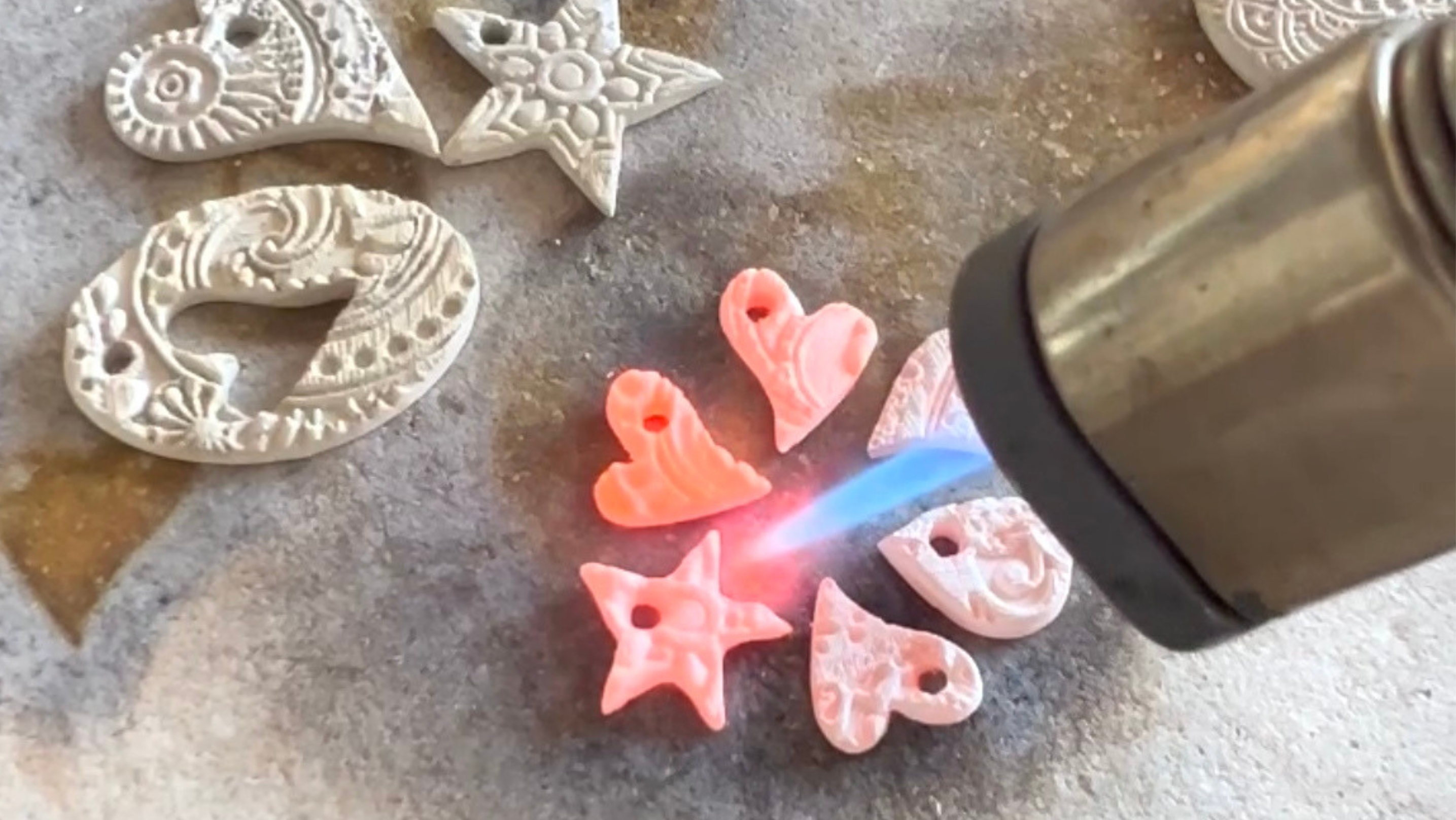
2. Can you torch fire silver metal clay?
Yes, but only for fine silver (999) clay, which for me is Art Clay Silver. The other clay that I'd recommend is the Cool Tools Torch Fireable Clay, which has a higher shrinkage rate but also torch fires beautifully.
- Small Pieces: Most people will say that torch firing is ideal for small pieces, such as charms, earrings, or small pendants. I torch fire all my pieces. Yes, that includes everything that you see me make on Instagram. Focus on making pieces which weigh less than 25g - that's a big chunk of clay!
- Torch Firing Tools & Equipment: Use a butane kitchen torch on a soldering block. I pop that onto a 12" x 12" soldering board, which for me, sits on top of a turntable. It's not necessary to have a turntable but I do find it useful for any soldering that I want to do.
- Safe Space: You will only need a small space for torch firing and I pop my soldering board on top of the kitchen hob. That way, I can pop the overhead fan on if I want to remove the smoke, which lasts for about 3-5 seconds when the binder is burning off.
- Technique: Turn on the torch and heat the piece until it smokes and you see a small flame. That's the organic binder burning off. Now, begin heating your piece until it starts to change colour and is a salmon pink colour. This is the time to start the clock. Continue to heat the piece, maintaining a "salmony" glow for the sintering time, which can be between 2–5 minutes.
- Do's: Be Safe at all times. Wear sensible clothing, a pair of goggles to protect your eyes and ALWAYS watch what you're doing. I recommend torch firing when there's no one else around, so you're not distracted.
- Do's - watch your piece throughout the process. I recommend torch firing two pieces at the same time. Both benefit from the residue heat from the other, and watching two will stop your eyes glazing over (yes, that does happen to me too!) and you losing valuable concentration.
- Don'ts: Don't try to torch fire base metal clays, such as copper or bronze. That goes for sterling silver (925) clay too. I've tried this and everything went to plan until I tried to polish the finished piece and it just broke up. These base metals and sterling silver need to be kiln fired.
- Don'ts - Quench your pieces after torch firing. It will work and if you're not going to be doing any more torch firing on that piece, that's probably okay. But, silver metal clay can still be porous after firing, especially if you're a beginner and haven't quite torch fired for long enough. A porous piece can absorb some of the water and when you go to torch fire again, if the water hasn't completely dried out, the water will expand and either crack your piece, or it might explode!
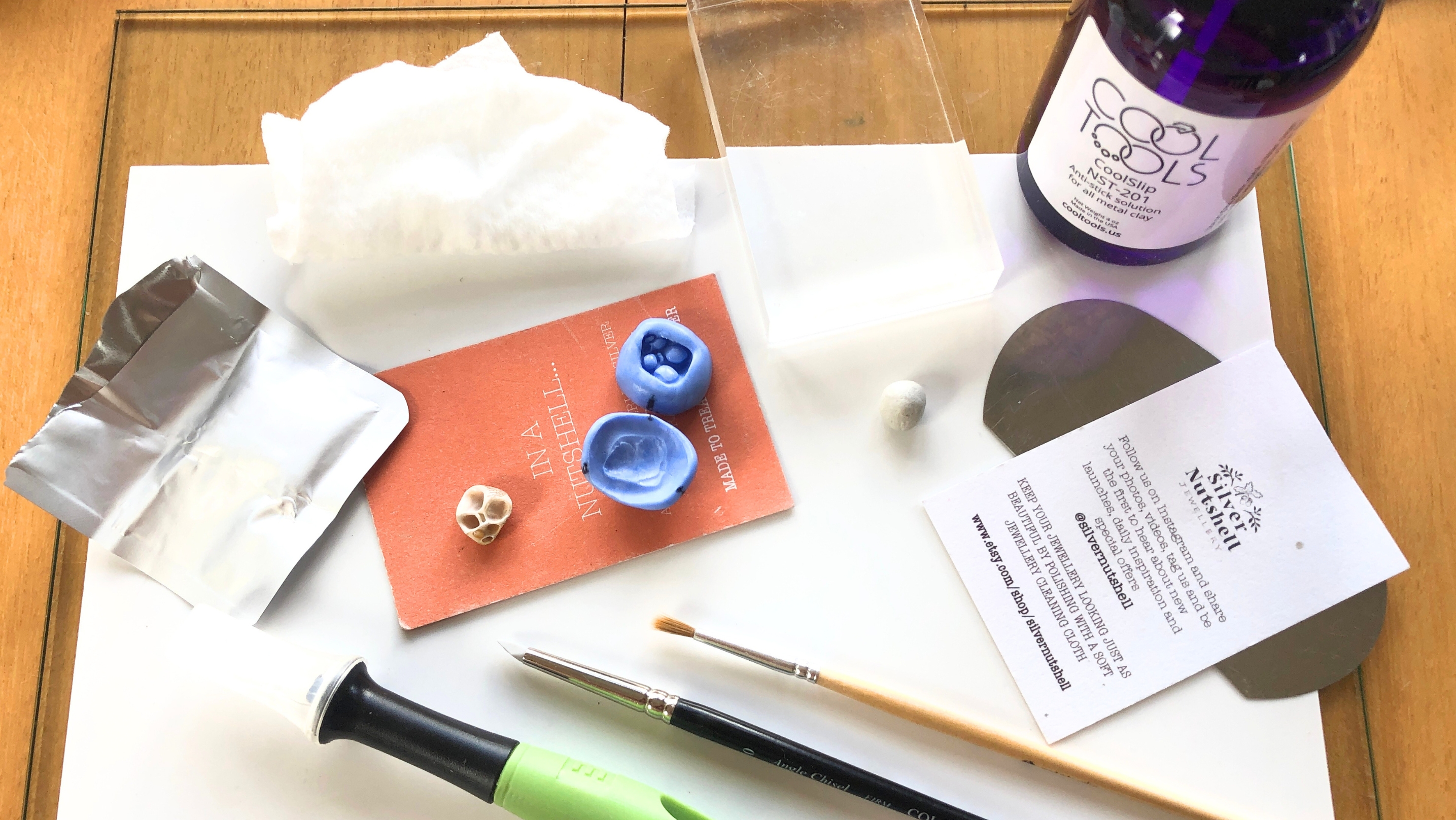
3. How to stop silver metal clay from sticking to moulds?
The most effective way is to use a release agent.
- Liquid release agents: Spray some onto the lid of a pot, or onto your mat, and use a paintbrush to lightly brush your mould. I use Coolslip, which is from the lovely team at Cool Tools. It works brilliantly and a bottle lasts for ages.
- Balm release agents: For smooth surfaces, use a balm release agent like Slik Balm from Cool Tools. Store it in a cool place to avoid it going soft.
- Alternatives: If you don't have access to the 'proper stuff' it's okay to use a little kitchen or olive oil.
4. What happens if my clay dries out before I finish?
Ooops! Silver metal clay is a water-based product and starts to dry out as soon as it's exposed to air. It's why I tell my students to always prepare their tools, and decide what they want to make, before they open the pack.
- Reconstitute your clay: you can "reconstitute" silver metal clay that is beginning to crack, by adding a tiny amount of water and wrapping it back in the wrapper. I usually spray some water into a cup and use my finger to wipe around the inside of the cup and then dab my finger on the clay. Wrap your clay in the wrapper and using a roller, press the clay to flatten it. Now open the wrapper, add another dab of water and fold the clay in half. Repeat the process of rolling it out between the wrapper, then pop it into the packaging and leave for at least 2 hours. Overnight is better.
- Reviving dry clay: it's quite normal to have to revive clay and I do it almost every time I make something. I try to make my pieces so I don't have spare clay lying around for too long. If possible, make your piece and then roll up the spare clay and wrap it back in the packaging. Obviously, you'll do this two or three times, if you don't use all of a packet of clay. And each time you open the packet, it will dry out a little more. In my experience, if I have any clay left after making two pieces, it's not suitable to be rolled out again and will need reviving to make it soft enough to use. That's when I'll go to the reconstitute instructions, see above, to bring the clay back to life.
- Don't waste any clay: If you've made a piece and it's in the greenware phase, so it's dry but not torch fired, you can turn it back into workable clay. I prefer to store dry clay in a small lidded pot until I need it. I use this type of clay to make silver metal clay paste, and I have recently begun using it to fill tiny silicone moulds, such as the sea creatures mould, which I bought on Amazon. The secret to reusing dry clay is to break it into small pieces and place them in a pot. I don't grind it up because I find that makes a lot of mess. I spray water into the pot and pop the lid on. I'll leave it overnight. If it's still dry, repeat the process, until you can stir it as a thick paste.
- Don'ts: Don't recycle your clay until you need it. Otherwise, it might dry out again before you need it.
Ready to start your silver metal clay journey?
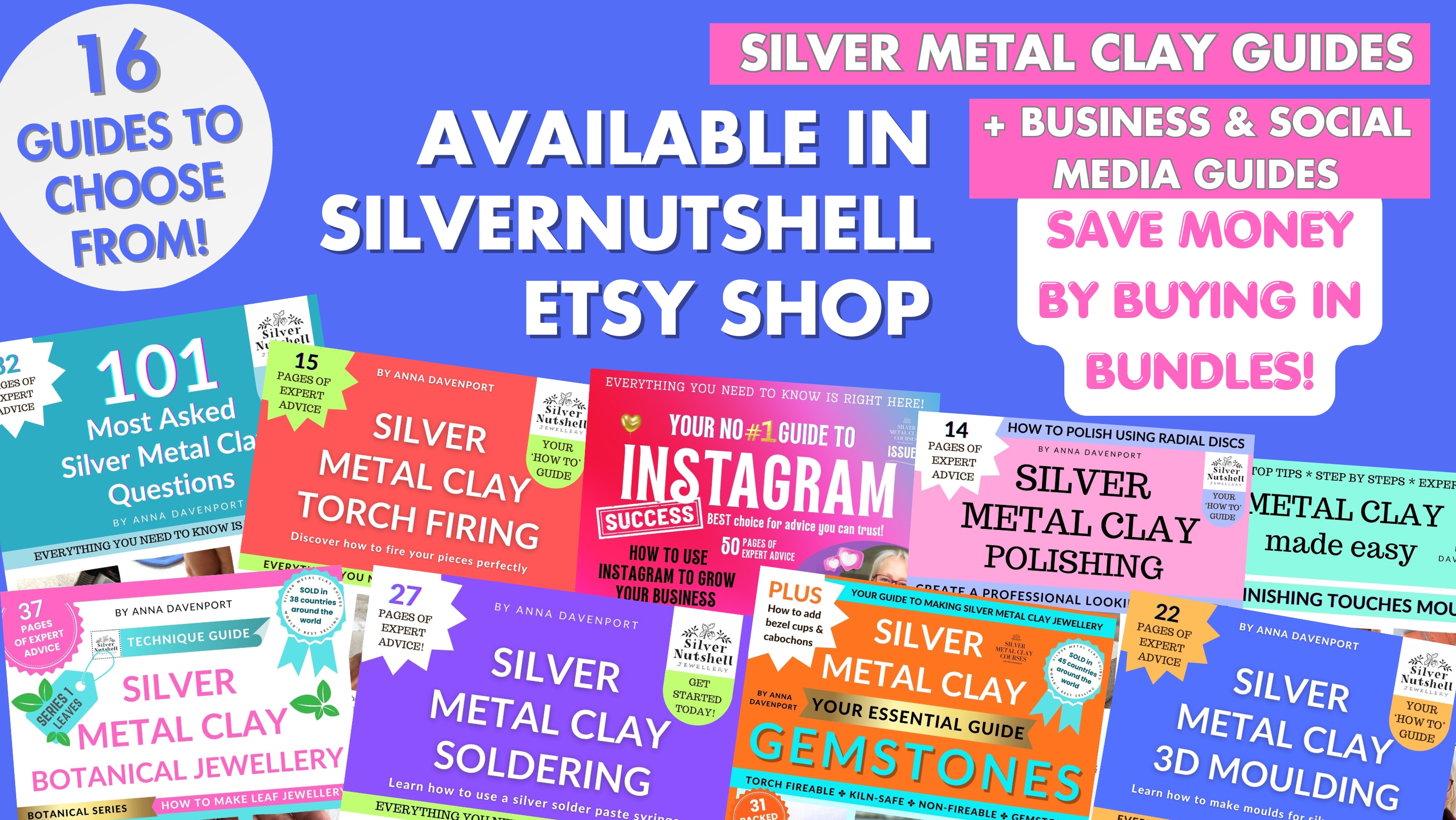
You can find all of my Silver Metal Clay Guides as individual PDF Guides or great value Bundles in my Etsy shop, Silvernutshell. Simply CLICK the image below to buy.
Whether you want to master a single botanical technique or grab a bundle to fast-track your learning and save on costs, each PDF is an instant download so you can get creating right away.
🌟 Top Etsy Reviews
These recent 5-star reviews highlight the clarity and confidence these Silver Metal Clay Guides provide:
- "So useful! It really helped me get to grips with metal clay. I was quite nervous before reading this but felt a lot more confident after! Marvellous!" — Review for "101 Q&A Guide"
- "Love that it downloads instantly—immediately ready to read! Clear and concise as are all this seller's PDFs. Can't wait to try the new clay! Recommend seller!" — Review by Marianna
- "Such a well-written and easy-to-follow guide. I have several of Anna's metal clay guides and they are all so helpful. I recommend them highly!" — Review for "Soldering Guide"
- "This book covers almost every question I can come up with. It's got great photos to go along with with description/instruction." — Review for "Polishing Guide"
- "Brilliant ! searched everywhere and watched loads of videos, this by far was the best on 3D moulds." — Review for "3D Moulding Guide"
CLICK HERE TO BUY SILVER METAL CLAY GUIDES
Join a global community of jewellery makers in over 47 countries and I will help you turn your creative spark into solid, fine silver jewellery!
If you prefer learning from ONLINE VIDEO COURSES, I've got YOU covered. Beginner's start with the MEGACOURSE, go onto making rings with the RINGMAKING MASTERCLASS, and then try ENAMELLING MADE EASY. I've recently launched a NEW GEMSTONE SETTING COURSE which shows you how to bezel set stones which you can't torch fire!